
When Was the First Motor Vehicle Invented?
Max Kelly
April 22, 2026
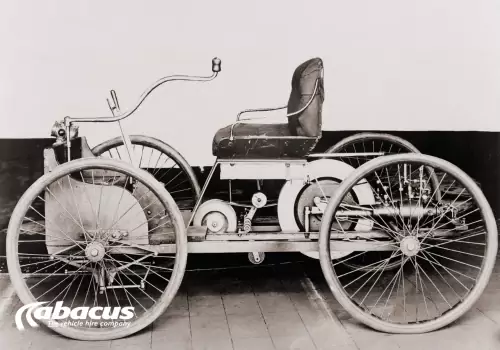
The first true motor vehicle was invented in the 1880s, marking the beginning of modern automotive transport. While earlier steam-powered experiments existed, the first practical petrol-powered vehicle is widely recognised as the starting point of the motor car era.
The invention is most commonly credited to German engineer Karl Benz, whose work led to the first commercially viable automobile.
The first successful motor vehicle is generally recognised as the Benz Patent-Motorwagen, built in 1885 and patented in 1886.
Karl Benz was awarded German patent DRP 37435 on 29 January 1886 for his three-wheeled vehicle powered by a petrol internal combustion engine. This is widely considered the birth of the modern car.
Unlike earlier steam-powered vehicles, the Motorwagen was designed specifically as a self-propelled road vehicle rather than a modified carriage.
It featured:
- A lightweight frame
- A single-cylinder petrol engine
- Three-wheel design for stability
- Mechanical steering and basic braking system
This invention is widely recognised as the first practical automobile suitable for everyday use.
When Was the First Vehicle Invented?
The answer depends on how a “vehicle” is defined.
- The earliest steam-powered road vehicles date back to the 18th century (such as experimental designs in the 1700s)
- However, these were not practical for everyday transport
- They were heavy, difficult to control, and not commercially viable
Because of this, most historians distinguish between early experimental machines and the first practical motor vehicle, which arrived in the 1880s.
The key breakthrough came when the internal combustion engine was successfully adapted for road use, making the automobile practical, scalable, and commercially usable.
Why the Benz Motorwagen matters
The Benz Patent-Motorwagen wasn’t just an invention — it was the foundation of the entire modern car industry.
Its importance includes:
- First practical petrol-powered vehicle
- First vehicle designed entirely as an automobile (not a modified carriage)
- First step toward mass automotive production
- Proof that personal motor transport was viable
This invention directly led to the global car industry we know today.